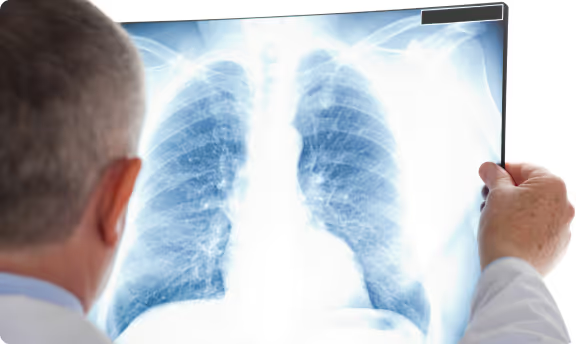
1.5 million people are diagnosed with pleural effusion every year in the United States. No matter the cause, Texas IPS can help.

Call Now

Types of pleural effusion

Pleural effusion, often called “water in the lungs,” occurs when excess fluid collects between the layers of the pleura—the thin membranes lining the lungs and chest cavity. Everyone has some amount of liquid in their pleura, but when it builds up, it can compress the lung, making breathing difficult.

There are two main types of pleural effusion:
Transudative (protein-poor)

This is caused by fluid leaking into the pleural space from increased pressure in blood vessels or a low protein count. It’s often caused by heart failure.

Exudative (protein-rich)

This is caused by fluid leaking into the pleural space from increased pressure in blood vessels or a low protein count. It’s often caused by heart failure.

What are the Symptoms of Pleural Effusion?

Patients with pleural effusion might experience:

Shortness of breath
Chest pain, especially when breathing deeply
Dry cough
Feeling of heaviness or tightness in the chest
Difficulty lying flat

What Causes Pleural Effusion?

Pleural effusion can result from various underlying conditions, including:

Congestive heart failure
Pneumonia or lung infections
Pulmonary embolism
Kidney or liver disease
Cancer
Autoimmune conditions (e.g., lupus)

How is Pleural Effusion Diagnosed?

Accurate diagnosis is crucial and typically involves:

Chest X-ray
CT scan of the chest
Ultrasound of the chest
Thoracentesis (procedure to remove fluid for testing)

Treatment of Pleural Effusion at Texas IPS

Our specialists at Texas IPS provide tailored care based on the underlying cause and severity of your pleural effusion. Treatment options include:

Thoracentesis to remove excess fluid
Chest tube insertion for continuous fluid drainage
Medical pleuroscopy
Ultrasound guided biopsy
Chemical pleurodesis

Referral Criteria

Patients may be referred to Texas IPS’s Pleural Effusion Program if they fit one or more of the following:


Recurrent exudative pleural effusion
Unexplained exudative effusion
Large Symptomatic pleural effusion
Atypical imaging findings
Concern for Malignant Pleural Effusion
Diagnostic Uncertainty
Pneumothorax
Chylothorax
Need for any pleural procedure

Pleural Effusion Physicians

Ali Abedi, MD, FCCP, DAABIP

Medical Director, Lung Cancer Service Line

Pulmonary Care

Critical Care

Interventional Bronchoscopy

Lung Nodule/Cancer Clinic

Aristides J. Armas Villalba, MD

Pulmonary Care & Critical Care

Lung Nodules

Lung Cancer

Pleural Disease

Fernando Vázquez de Lara, MD

Pulmonary Care

Critical Care

Franklin Argueta, MD

Pulmonary Care

Asthma

COPD

Gustavo Gabino Miranda, MD

Pulmonary Care

Critical Care

Lung Nodule/Cancer Clinic

Mohamed Abdalla, MD

Pulmonary Care

Critical Care

Interstitial Lung Disease

Lung Nodule/Cancer

Asthma

See where you can find us

Have questions or need to speak with our team? Give us a call — we’re here to help.

Get In Touch